


St Germain Neighborhood Paris: What It's Like to Live There
A practical guide to daily life, homes, transport and current property prices in Saint-Germain-des-Prés, Paris.

- Published on
- Reading time
- 7 min read
Introduction
The St Germain neighborhood in Paris is often described through its past: Sartre at Café de Flore, jazz cellars and publishers. That history matters, but it tells you little about living there day to day.
Saint-Germain-des-Prés is also a residential neighborhood. Residents shop at the covered market, use the Luxembourg Gardens and live above streets visitors come to photograph. This guide focuses on daily life, housing, transport, and the decisions involved in buying here.
One clarification first: “Saint-Germain” is used loosely in Paris. Some listings apply the name to nearby streets in the 7th arrondissement, and the feel changes from one block to the next.
The question to keep in mind is simple: do its location, lifestyle and property costs fit what you actually need?
Where Is Saint-Germain-des-Prés in Paris?
Saint-Germain-des-Prés sits on the Left Bank of the Seine, at the centre of the 6th arrondissement, around the abbey church that gave it its name.
Is Saint-Germain in the 6th arrondissement?
Yes. The historic core lies in the 6th arrondissement. But the neighborhood and the arrondissement are not the same thing.
The 6th has four administrative quartiers:
- Saint-Germain-des-Prés: the historic heart around the church
- Monnaie: the riverside streets toward the Institut de France
- Odéon: from the theatre to the edge of the Luxembourg Gardens
- Notre-Dame-des-Champs: the southern part toward Montparnasse
Some listings use “Saint-Germain” for nearby streets in the 7th as well. Check the address before comparing prices. For a wider comparison, see Estate in Paris’s guide to the best neighborhoods to stay in Paris (opens in a new window).
Which streets and areas feel most residential?
The character changes quickly:
- Boulevard Saint-Germain: the main artery, with traffic, buses and flagship shops.
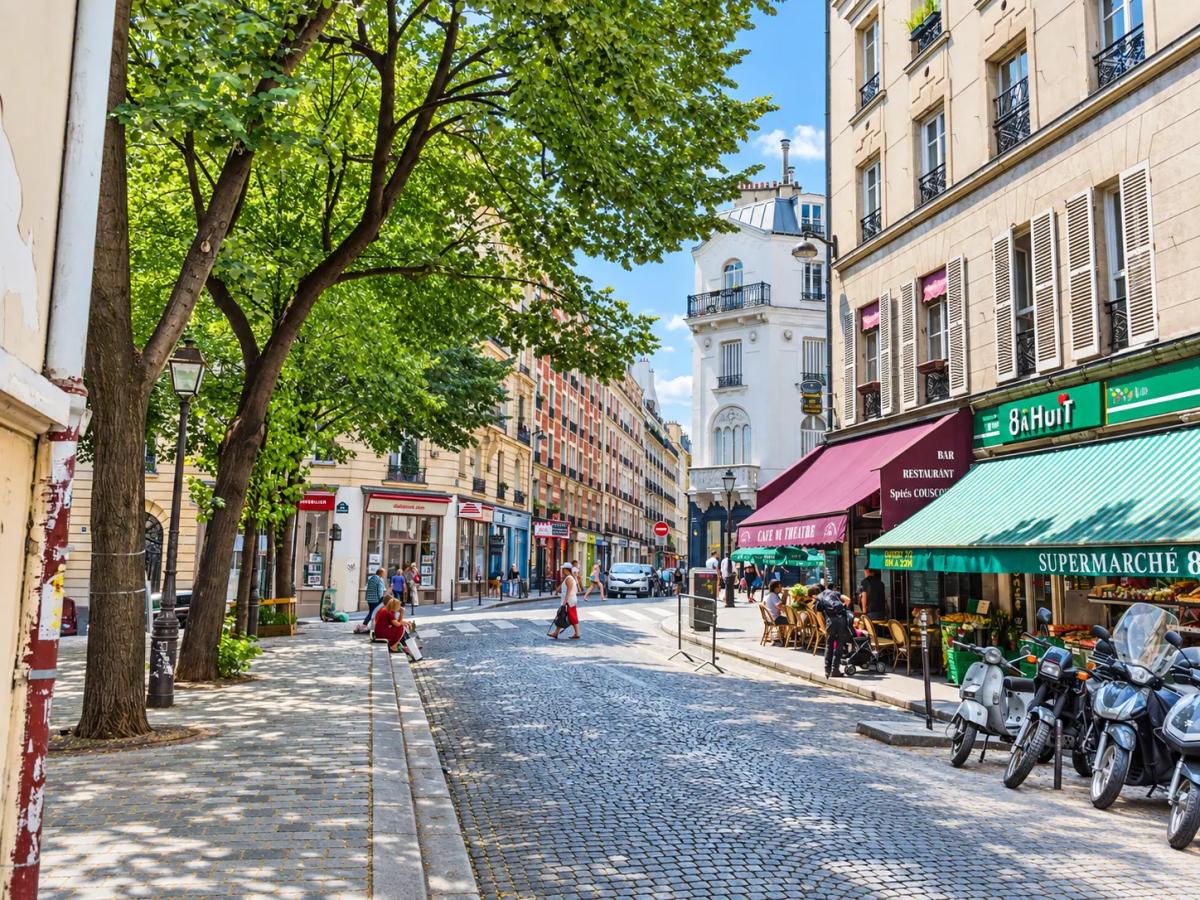
- Rue de Buci and Rue de Seine: food shops, terraces and a constant flow of people.
- Rue de Rennes: a busy shopping street running south.
- Rue Bonaparte and Rue Jacob: galleries and antique dealers, with a calmer pace once shops close.
- Streets toward Odéon and the Luxembourg Gardens: generally the most residential, with schools, family flats and quieter evenings.
These are tendencies, not fixed boundaries. Rue de Buci stays active later than side streets toward the Luxembourg Gardens. A courtyard apartment on a busy street can be quieter than a street-facing flat on a “quiet” one.
What neighborhoods are nearby?
- Odéon: an extension of Saint-Germain to the east, slightly more academic and residential.
- The Latin Quarter (5th): student life, the Sorbonne and Boulevard Saint-Michel, livelier and somewhat less expensive.
- Luxembourg: the streets around the gardens, favo
- red by families.
- The 7th arrondissement: to the west, with ministries, embassies and larger apartments around Rue du Bac and the Faubourg Saint-Germain.
Watch the video to discover the real St Germain - one of the most elegant neighborhoods in Paris.
What Makes Saint-Germain Appealing to Residents and Buyers
Saint-Germain combines many daily needs with a central location, though convenience varies by street and home.
- Everything on foot: a covered market, food streets, schools, bookshops and doctors are all close at hand.
- Green space: the Luxembourg Gardens and the Seine quays are both within easy reach.
- Transport: Métro lines 4, 10 and 12 serve the neighborhood or its edges, with RER stations a longer walk away.
- Historic buildings: older architecture and heritage rules shape the streetscape, while also affecting what owners can change.
- Past price trend: at the end of 2025, the 6th arrondissement’s standardised apartment price was down 3.0% over five years (opens in a new window), compared with 10.9% for Paris overall. This historical comparison is context, not a forecast or guarantee of future value.
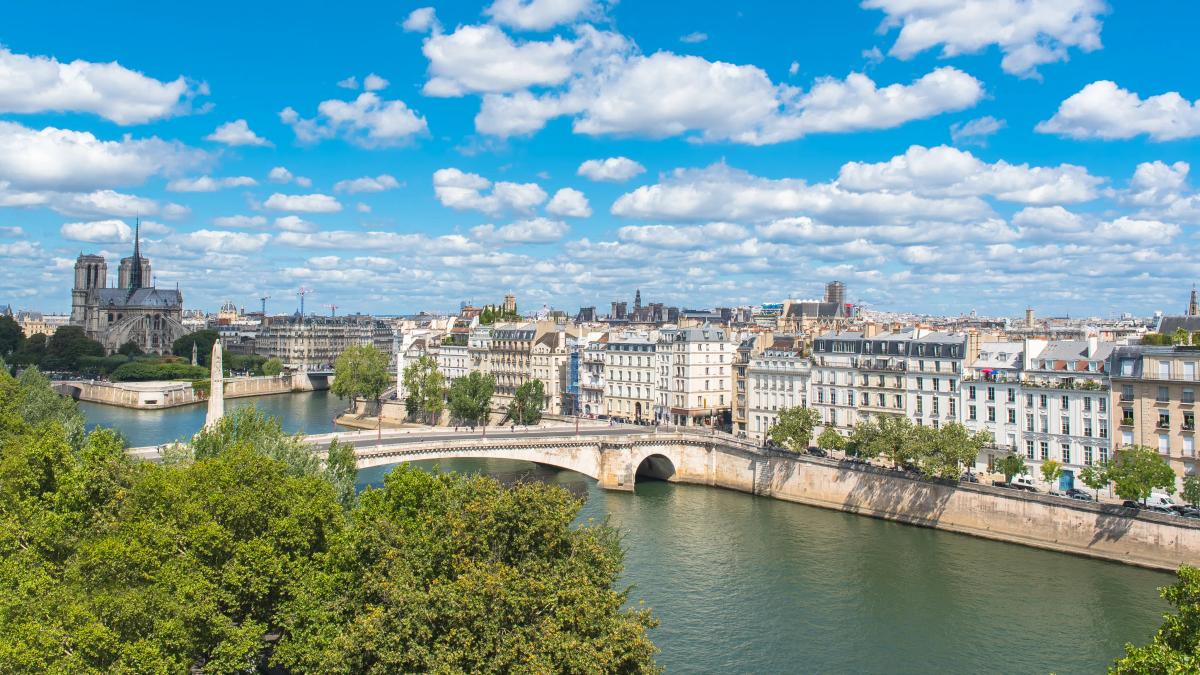
Daily Life in Saint-Germain: Amenities, Atmospheres & Neighborhoods
Daily life in Saint-Germain is practical and walkable, though you will share some of your streets with visitors for much of the year.
What shops and services are nearby?
It helps to separate what residents use every day from what visitors come for.
Everyday amenities:
- the covered Marché Saint-Germain, with fresh food stalls
- the Raspail market on the boulevard of the same name, including an organic market on Sundays
- bakeries, cheese shops, butchers and greengrocers, concentrated around Rue de Buci, Rue de Seine and Rue du Four
- pharmacies, doctors, dentists and dry cleaners spread across the neighborhood
- supermarkets, mostly in the smaller city-centre formats
Destination retail and culture:
- fashion and luxury boutiques along the boulevard and Rue de Rennes
- art galleries and antique dealers between Rue de Seine and the river
- remaining bookshops and publishers, though far fewer than a generation ago
The commercial mix has changed. Fashion boutiques have taken the place of some bookshops and publishers, while food shops, markets and cafés still serve residents. The neighborhood is less bohemian than its reputation suggests.
Is Saint-Germain lively or quiet?
Both, depending on where you stand. The boulevard, the Buci crossroads and the café corners stay busy into the evening, especially from spring to early autumn. A few streets away, the same evening can be very calm.
Noise depends on:
- Time of day: deliveries early, terraces late.
- Season: summer and fashion weeks bring more people.
- Floor: upper floors usually hear far less.
- Orientation: a bedroom facing the courtyard is often quieter than a street-facing one.
- Windows: double glazing makes a measurable difference in older buildings.
Visit any apartment twice before deciding: once on a weekday morning, and once late on a Friday or Saturday evening.
What is the neighborhood like for families and long-term residents?
It can work well for families, but it takes more planning than in more residential arrondissements.
The Luxembourg Gardens offer space for walks and children’s activities. The 6th also has several established schools, including Lycée Montaigne, Lycée Fénelon and École Alsacienne. Many errands can be done on foot.
The constraints are mostly about space and cost. Larger apartments can be harder to find than in more residential parts of the 7th, 15th or 16th, and they usually come at a premium. Public school places depend on your address (the sectorization system), and international schools sit mostly in the west of Paris and its suburbs.
So check the commute to your specific school before you commit to an address.
What Are the Main Things to See and Do?
The area’s landmarks are part of its identity, but residents also experience them as working public spaces that can draw visitors.
Which cultural landmarks shape the area?
The abbey church of Saint-Germain-des-Prés is one of the oldest churches in Paris, and its bell tower marks the neighborhood’s historic centre. Nearby, Café de Flore, Les Deux Magots and Brasserie Lipp sit alongside the Eugène Delacroix museum, Saint-Sulpice and the Odéon theatre. Galleries and antique dealers cluster around Rue de Seine and Rue Bonaparte. For residents, exhibitions, theatre evenings and church concerts add to local life, although landmark streets also attract visitors.
Where can residents walk and spend time outdoors?
The Luxembourg Gardens are the neighborhood's main green space. They are used daily for running, children's play and lunch breaks.
Smaller spots include the Square Félix-Desruelles beside the church and the quiet Place de Furstenberg. The Seine quays to the north offer long riverside walks toward the Louvre, the Pont des Arts and the Île de la Cité.
How is the area changing?
A recent public-space change is around the church itself. The city redesigned Place Saint-Germain-des-Prés, adding 130 m² of pedestrian space and eleven trees. It also created a pedestrian-priority meeting zone with a 20 km/h speed limit.
Commercial change is slower and less welcome to some residents. As noted above, fashion boutiques have replaced many bookshops. But food shops, markets and neighborhood cafés remain, and many residents still describe the area as a village behind its boulevards.
How Well Connected Is Saint-Germain?
The area is walkable and served by several Métro stations. Check routes from the exact address, since the nearest stop and easiest journey vary across the neighborhood.
Métro and bus connections in Saint-Germain
- Métro line 4 serves Saint-Germain-des-Prés, Odéon and Saint-Sulpice.
- Métro line 10 serves Mabillon and Odéon.
- Métro lines 10 and 12 serve Sèvres-Babylone, west of the historic core.
- Métro line 12 also serves Rue du Bac.
- RER B and C are available at nearby stations, including Saint-Michel–Notre-Dame and Musée d’Orsay. Airport routes require checking for the current service and any transfers.
Check service details before you visit, as lines and stops can change during works.
Getting around Saint-Germain without a car
Yes, and most residents do. The Latin Quarter, the Louvre, the Marais and Montparnasse are walkable or a short Métro ride away. The exact journey to other parts of Paris depends on your address and route.
A car is often more trouble than it is worth here. Residential parking is limited, private spaces are expensive, and deliveries on narrow streets need planning. If a parking space matters to you, include it in your search from the start, because few apartments come with one.
Route checks for property viewings
Walk the journeys you will make most often, at the times you will make them:
- from the door to the nearest Métro station during the morning rush
- to your office, your children's school and the nearest supermarket
- back home late in the evening, to see how the street feels
A five-minute difference on a map can become a daily issue when it affects school drop-off or peak-hour travel.
Types of Homes That You Can Find in Saint-Germain
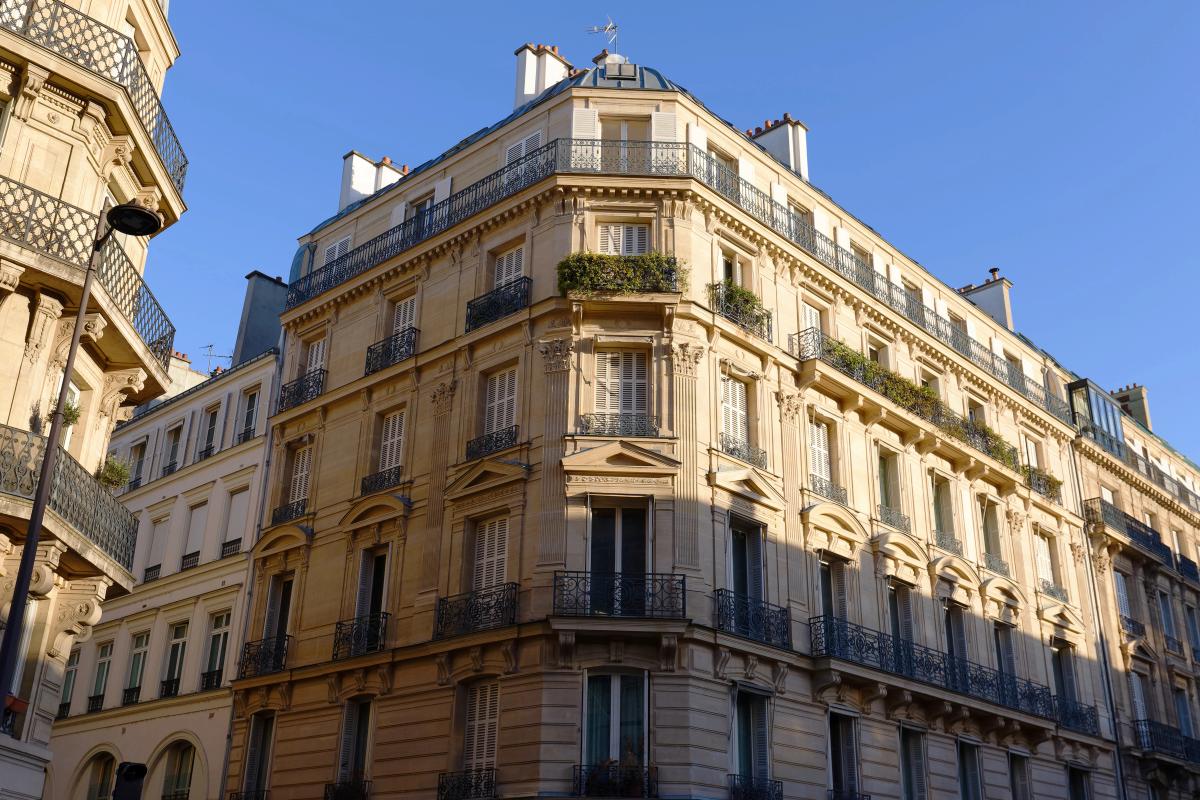
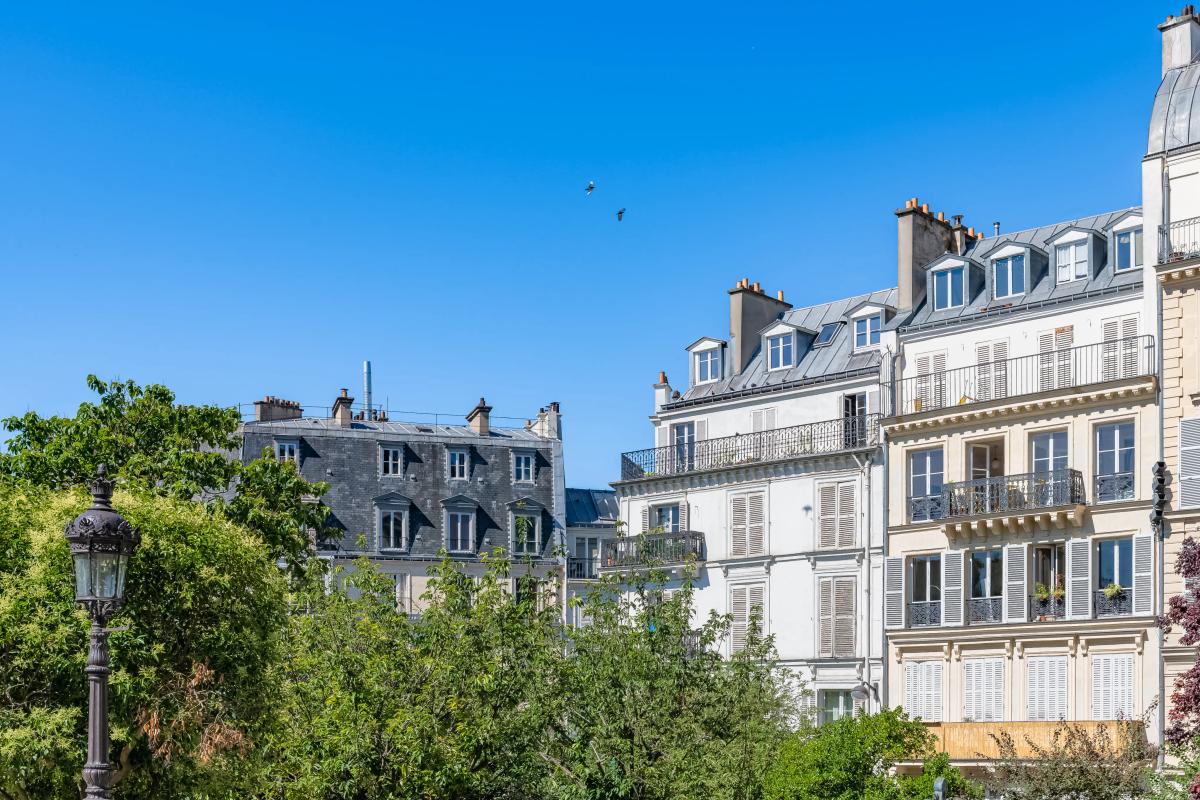
Saint-Germain's housing is mostly older apartment buildings, and the condition varies far more than the façades suggest.
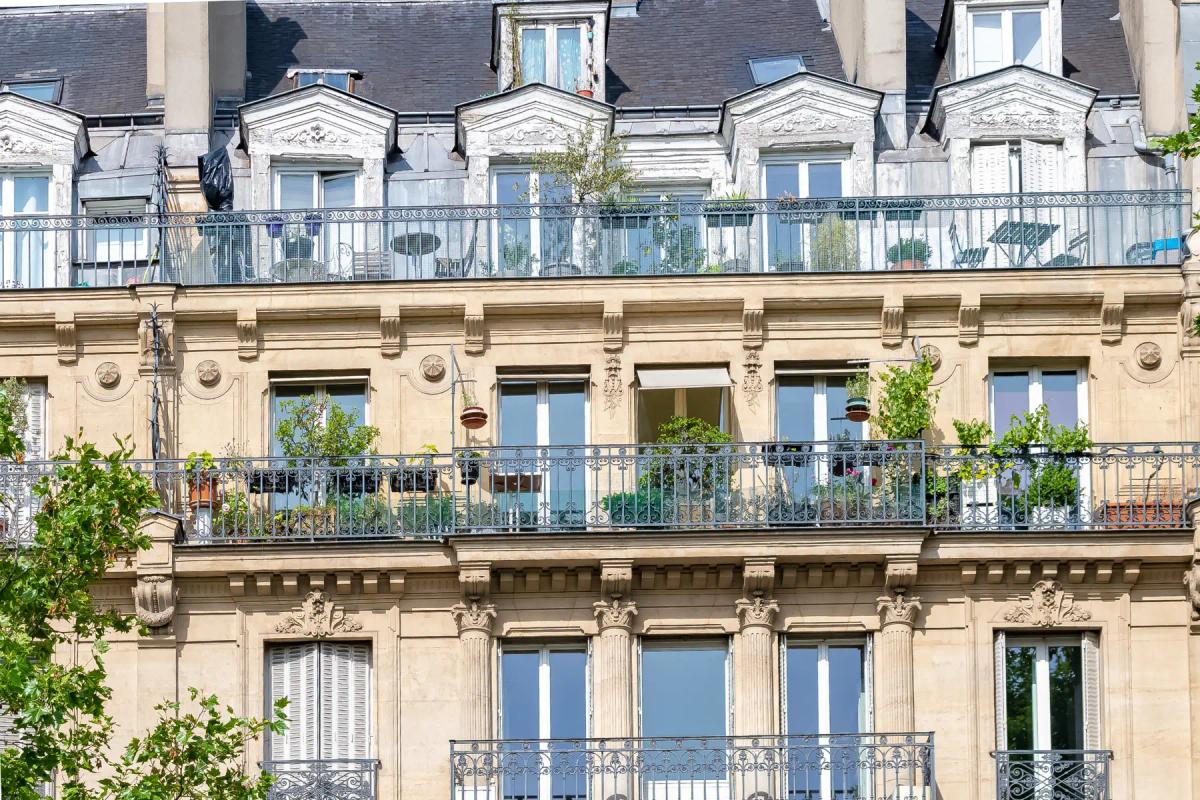
Building types in Saint-Germain-des-Prés
You will mostly find three kinds of buildings:
- 17th and 18th-century buildings: often around courtyards, with exposed beams, stone staircases and terracotta floor tiles (tomettes). Some have no lift, or a small one added later.
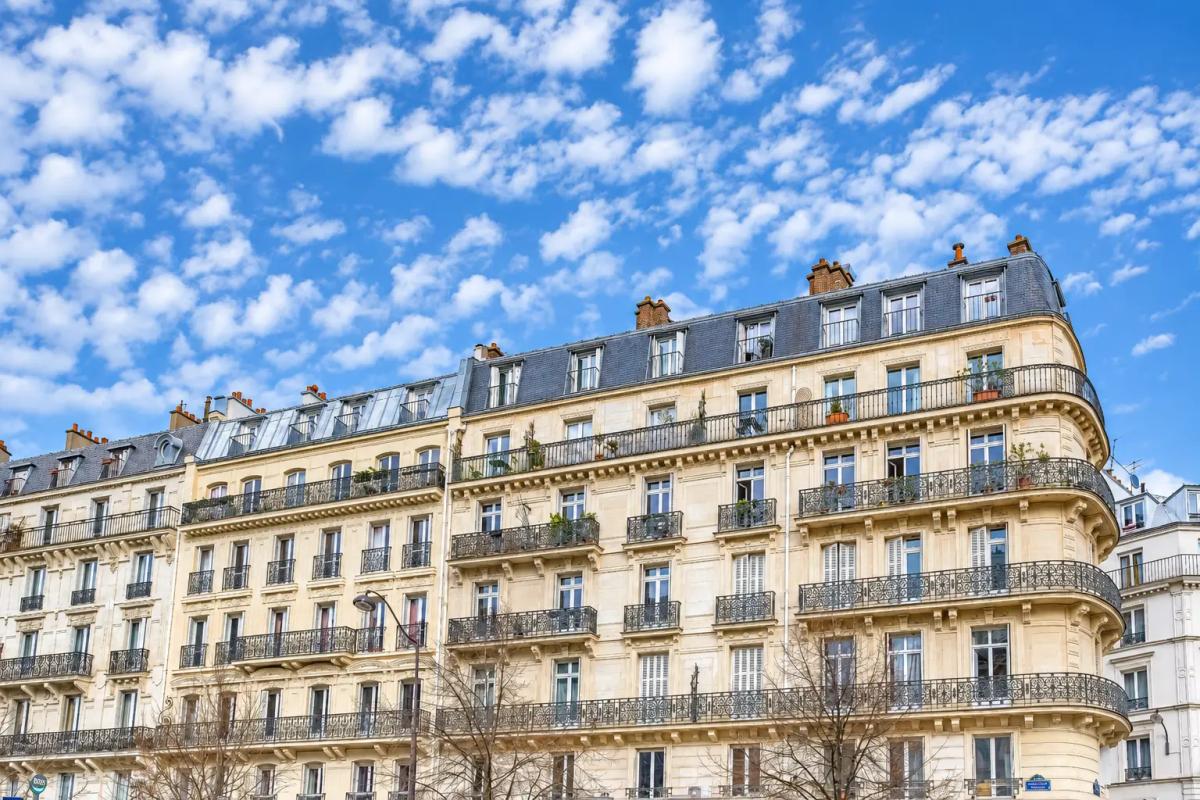
- Haussmann-era buildings: along the boulevards opened in the 19th century, with high ceilings, mouldings, parquet and a noble floor (étage noble) with balconies.
- A few private mansions (hôtels particuliers): rare, occasionally divided into apartments.
Many buildings sit near listed monuments or under heritage protection. Works on façades, windows or roofs may need approval from the Architecte des Bâtiments de France, which can affect renovation plans and timelines.
Key checks when buying an older Paris apartment
The neighborhood’s reputation does not tell you about a specific apartment. Check the property and the building on their own merits.
- Floor and lift: a fifth floor without a lift suits some buyers and rules out others.
- Light: check the orientation and what faces the windows across a narrow street.
- Noise: test the street side and the courtyard side.
- Heating and insulation: check the apartment’s DPE and heating system. Energy performance affects comfort and running costs, and may matter if you plan to rent the property.
- Renovation history: wiring, plumbing and structural work should be documented.
- Co-ownership documents:
- minutes of the last three general meetings
- the maintenance log
- any planned works, including Paris's ten-yearly façade cleaning (ravalement)
- Charges: ask what the monthly co-ownership charges cover, especially for buildings with a caretaker or collective heating.
Before a viewing, check these required documents before buying property in France (opens in a new window), including the purchase process and checks before signing.
Suitable profiles to live in Saint-Germain
It suits many profiles, but not every apartment suits every profile.
- Professionals and couples often find a one- or two-bedroom flat with good light ideal.
- Families need to look harder for space and should start with the school.
- Second-home owners value low-maintenance apartments in well-run buildings because they are away for long periods.
- International buyers often like that everything works on foot, and the neighborhood’s central location appeals to many buyers.
Property Costs in Saint-Germain: Factors & How to Check Prices
Saint-Germain is one of the most expensive neighborhoods in Paris, but the price of any one apartment depends far more on the property than on the neighborhood average.
Factors that determine apartment prices in the neighborhood
Two apartments on the same street can have very different values. The main drivers are:
- Location: the street, the floor and any view.
- Building: the presence of a lift, the condition of the common parts and the health of the co-ownership's finances.
- The apartment itself: light, layout and condition.
- Extras: outdoor space, such as a balcony or terrace, which is rare and highly valued.
A courtyard-facing ground floor and a bright upper floor with a balcony in the same building can sell for very different prices per m².
How to check current prices
Use official data, and use it carefully:
- Quarterly market data: Notaires du Grand Paris reported (opens in a new window) standardized prices for older apartments of €13,980/m² in the 6th and €9,560/m² across Paris in Q2 2026. Use these as dated market context, not as an estimate for one apartment.
- Quartier prices: the notaires’ price list by quartier shows how the four quartiers of the 6th compare.
- Recorded sales: the government’s DVF database of property transactions shows recorded sale prices by address.
Use agency estimates only as context. Check them against notarial and DVF transaction data, and do not treat a neighborhood average as a property valuation report (opens in a new window).
Why can two nearby apartments have different values?
Because buyers pay for the specific property, not the postcode.
At the end of 2025, the notaires’ standardised price was €15,870/m² in Saint-Germain-des-Prés and €13,430/m² in Notre-Dame-des-Champs, both in the 6th arrondissement. Applied to a 60 m² apartment, that difference is about €146,000. It is an illustration of the gap between quartier averages, not an estimate for an individual home.
Within one street, the same logic applies. Floor, light, condition and building quality can outweigh the arrondissement average entirely. Recent comparable sales in the same building or street are the strongest evidence you can bring to a negotiation.
| Area | Arrondissement | Price per m², end 2025 | 1-year change | Character |
|---|---|---|---|---|
| Saint-Germain-des-Prés | 6th | €15,870 | +2.4% | Historic core, cafés, galleries |
| Odéon | 6th | €14,780 | +4.8% | Theatre, Luxembourg edge, residential |
| Monnaie | 6th | €13,480 | -3.0% | Riverside, Institut de France, antique dealers |
| Notre-Dame-des-Champs | 6th | €13,430 | -1.3% | Quieter, toward Montparnasse, family flats |
| Saint-Thomas-d'Aquin (Rue du Bac side) | 7th | €14,690 | -1.3% | Ministries, larger apartments |
| Sorbonne (Latin Quarter) | 5th | €12,740 | +5.2% | Universities, livelier streets |
| Paris average | All | €9,600 | +1.4% | City-wide benchmark |
Living in Saint-Germain: Who It Suits Best
Saint-Germain suits people who want central, walkable Paris and accept the costs and crowds that come with it.
1. Saint-Germain for international residents
Often, yes. The neighborhood is central, walkable and culturally rich, and English is widely spoken in shops and services.
But think about practical needs, not just the setting:
- Commute: to your office or school.
- Daily services: the doctors, pharmacies and supermarkets you will actually use.
- Language support: check whether you need English-speaking professionals locally.
- Budget: whether it supports the space you need.
For American and British buyers, the French process may differ from the one they know. Understand the offer, compromis de vente, and the notaire’s role before committing.
2. Saint-Germain for families
It can be, with planning. The Luxembourg Gardens, good schools and walkable errands are real advantages. The challenges are apartment size, street noise on the busier blocks, and the cost of extra bedrooms. Families who need three or more bedrooms on a fixed budget usually get more space in the 7th, 15th or 16th.
3. Other Paris neighborhoods to consider
You may be happier elsewhere if you want:
- Lower housing costs: the 9th, 11th or 15th give you more space per euro.
- A larger home or private outdoor space: the 16th or the inner western suburbs.
- A quieter street at all hours: Notre-Dame-des-Champs, the 7th or the 16th.
- A more local, less visited feel: Batignolles (17th) or the 12th.
None of these is a lesser choice. They answer different daily needs.
If you are still testing your plans, Estate in Paris explains when renting first makes sense before buying in Paris (opens in a new window).
What Should Buyers Know Before Buying an Apartment in Saint-Germain?
A purchase decision should rely on the property and transaction evidence, not the neighborhood’s reputation alone.
Factors that influence the value of what you buy
The same factors that shape resale value should shape your offer:
- Location: address, floor and orientation.
- Building: its condition and any planned works voted by the co-ownership.
- The apartment: layout, renovation quality and energy rating (DPE).
- Price evidence: recent comparable sales nearby.
The notaires described the Q2 2026 market as a gradual but fragile recovery. Conditions vary by property and location. Buyers should compare the asking price with recent sales and the apartment’s condition before making an offer.
Checks to purchase costs and ownership rules
- Acquisition costs: allow roughly 7 to 8% for an existing property, but check the estimate for your transaction. Most of this amount consists of taxes and duties. Use the notaires’ purchase cost calculator (opens in a new window) for a tailored estimate.
- Second-home tax: a furnished home that is not your main residence may be liable for taxe d’habitation. Paris applies a 60% surcharge to the relevant tax bill.
- Short-term letting: Paris limits furnished tourist rentals of a main residence to 90 days a year. A second home requires prior change-of-use authorisation and compensation to be used as a tourist rental. Check the current City of Paris rules for furnished tourist rentals (opens in a new window) and the building’s copropriété regulations.
- Financing: terms depend on your income, assets, residency and lender. International buyers should confirm their borrowing capacity before setting a purchase budget.
Get support with your Paris property search
Finding the right apartment in Saint-Germain involves more than browsing listings. Buyers need to compare streets, buildings, property condition and recent sales before deciding whether a home fits their needs.
If you are ready to discuss a search, explore Estate in Paris’s property-buying service in Paris (opens in a new window). You can explain your preferred areas, budget, timing and property requirements, then speak with the team about the support available at each stage. International buyers planning remotely should also ask how viewings, French-language documents and signing arrangements can be handled for their situation.
FAQ
No. The historic Saint-Germain-des-Prés quartier is one of four quartiers in the 6th. The others are Monnaie, Odéon and Notre-Dame-des-Champs, each with its own character and price level.
Conclusion: Is the St Germain Neighborhood Right for You?
Saint-Germain-des-Prés offers central, walkable Paris, historic architecture, cultural venues, and everyday shops. It also comes with premium prices, busy streets, and fewer large apartments than some residential areas.
If you are considering a move or purchase, compare the exact street, building and apartment with your budget and daily needs. Contact us (opens in a new window) to review recent sales and copropriété documents before making an offer.