


Is It Better to Rent or Buy in Paris? A Guide for International Buyers
A Paris-specific decision framework for expat families, executives and non-resident owners weighing rent, buy, or rent first and buy later.


- Published on
- Reading time
- 16 min read
Introduction
Paying €3,000, €4,000 or more a month in rent makes buying feel like the obvious next step. The arithmetic seems simple: that money could be going into something you own. In Paris, though, comparing your rent to a mortgage payment tells you only a small part of the story.
Three things make this market different from the one you probably came from. Acquisition costs are high and paid in full at the start, not amortised over the life of the loan. Financing conditions for international buyers are meaningfully tighter than for French residents, in deposit size and loan term as much as in interest rate. And the gap between neighbourhoods is wide enough that where you buy matters more than when you buy. Layer on school decisions, a spouse's career and genuine uncertainty about how long you will stay, and the decision stops being financial arithmetic and becomes something closer to planning.
This is not an article arguing that buying is always better. The right answer depends far less on what Paris prices do next year, and far more on how long you expect to stay, how settled your plans are, and what buying would leave you financially able to do afterwards.
When Renting Works Better in Paris
Renting suits people whose situation is still moving. That sounds obvious until you notice how many international buyers treat renting as a failure to act rather than a deliberate choice. In Paris, it is often the better decision on the merits, and here is when.
1. You are still getting to know Paris
An arrondissement is not a neighbourhood. The 18th contains Abbesses and it contains La Chapelle, and the experience of living in each is not remotely the same. The 15th is calm and residential in places and busy and commercial in others. Until you have lived somewhere through a winter, you are choosing on a map rather than on evidence.
The details that determine whether you like an apartment are the ones you cannot assess from abroad:
- Your actual door-to-door commute, including the interchange nobody warns you about
- The school run, and whether it works in the same direction as your commute
- Street noise on a Friday night as opposed to a Tuesday afternoon
- Which floor you are on, whether there is a lift, and how much daylight you get in January
- How much space a Paris apartment of a given square metre count really gives a family
- Whether the surrounding streets have the food shops, pharmacy and green space you use weekly
Renting buys information as well as flexibility. A year of living somewhere is the cheapest due diligence available on a purchase that will cost you six figures in transaction costs alone if you get the location wrong and have to move again.
2. Your stay is short or uncertain
This applies most sharply to diplomats and embassy staff on a defined posting, executives on assignment, senior professionals who could be transferred, and entrepreneurs whose plans depend on how a business develops.
The principle is straightforward. France charges most of the cost of buying at the moment you buy, not gradually. The shorter your expected ownership, the fewer years you have to spread those costs across, and the harder it becomes for the purchase to make sense financially. We look at the actual figures further down, but the direction of travel is clear well before you get to a spreadsheet.
Worth separating two different kinds of short stay. A fixed three-year posting is short and certain. A five-year assignment that might extend is short and uncertain, and uncertainty is the harder problem, because it makes the decision feel deferrable when it is actually the decision.
3. You want to keep more capital available
This one matters most to executives and business owners, and it is the factor most often skipped.
Buying in Paris as a non-resident ties up a large amount of cash at once: the deposit, the acquisition costs, and often a guarantee arrangement on top. That capital is then locked into an asset that is not quick to sell. If you run a business, if you expect to need liquidity, or if you have other uses for the money that you rate more highly, the relevant question is not the one people usually ask.
The useful question is not "can I afford to buy?" It is "can I afford to buy without making the rest of my financial position less comfortable than I want it to be?"
4. The trade-offs of renting in Paris
None of this means renting is easy. It would be dishonest to present it that way.
The Paris rental market is genuinely competitive, and a well-priced family apartment in a sought-after arrondissement can attract a queue of applicants. International tenants face specific friction: landlords expect a full dossier, often want a French guarantor, and frequently struggle to assess foreign or self-employed income. Larger apartments with three or four bedrooms are scarcer than the listings volume suggests. You have limited scope to renovate or adapt the space. And the rent keeps being paid, month after month, with nothing accumulating.
If your immediate problem is finding somewhere to live rather than deciding whether to buy, our sister company handles that side of the market. Their breakdown of what renting in Paris actually costs an international tenant (opens in a new window) is a more useful starting point than the headline figures you will find on listing portals.
When Buying Works Better in Paris

Buying makes sense when the uncertainty that argues for renting has largely resolved. That is the honest summary. The signals below are worth reading together rather than individually.
1. Paris is becoming your long-term base
There is usually a moment when a stay stops feeling temporary. Employment settles. The children stop talking about their old school. You have a preferred baker and a preferred park and a strong view about which side of the boulevard you want to be on. Paris has moved from being a posting to being part of a longer plan.
That shift matters more than any market forecast, because it changes the number of years you will hold the property, and the holding period is the variable that does the most work in the calculation.
2. Stability matters more than flexibility
For families with school-age children, this often outweighs everything financial.
Keeping children in the same school through a full cycle has real value that does not appear in any break-even model. So does staying in a neighbourhood where friendships have formed, avoiding a second or third move within a few years, and being able to adapt the apartment to how your family actually lives rather than to what a landlord permits.
This is the point most rent-versus-buy guides miss. For an expat family, rent versus buy is often a school stability decision before it is an investment decision. If moving again in eighteen months is genuinely unacceptable to you, you have already narrowed your own answer, and the financial analysis is there to confirm it rather than to make it.
3. Your finances can support the full cost of ownership
Not the mortgage payment. The full cost.
That means the deposit, the acquisition costs, the monthly loan repayment including borrower's insurance, the annual ownership costs, and whatever liquidity you want to keep afterwards. A purchase that leaves you technically solvent but without a cash buffer in a foreign country is not a comfortable position, particularly if the copropriété votes for a façade renovation in your second year.
The comparison that matters is therefore not rent against mortgage. It is rent against the full financial cost of owning.
4. The trade-offs of ownership
Buying carries its own costs, and they are worth stating plainly:
- Acquisition costs are high and non-recoverable
- Maintenance is yours, and so is your share of building works voted by the copropriété
- Copropriété charges in older Parisian buildings are not trivial
- You lose mobility, or you pay to regain it
- Prices can fall, and Paris prices did fall between 2022 and 2024
- Selling too soon can lock in a loss, and some owners find themselves holding a property they would rather sell
- Capital is committed to an asset that is not liquid
None of these are reasons not to buy. They are reasons to buy for the right holding period.
Five Factors That Shape the Rent-or-Buy Decision
By this point you have seen both sides. The practical step is to hold your own situation against the factors that actually move the answer.
1. Length of stay
This is the single most important input, and it deserves an honest answer rather than an optimistic one.
A fixed two or three year posting is a different proposition from an open-ended relocation. A five-year assignment that might extend to ten is different again, and the useful exercise is to ask what happens in the version where it does not extend. Be careful with universal thresholds you may have read elsewhere. As the cost section shows, published break-even estimates for Paris vary enormously depending on what the model counts.
2. Knowledge of Paris and your target neighbourhood
Ask yourself how specific your answer is. Do you know the arrondissement, or do you know the micro-quartier? Do you know which schools have places, what the commute really takes, which building type suits you, and how much space you need as opposed to how much you would like?
Someone who has lived in Paris for four years is making a fundamentally different decision from someone arriving next month. Both can be right to buy. They are not right for the same reasons or on the same timescale.
3. Career and family flexibility
Worth thinking through together rather than separately:
- The realistic probability of an international transfer
- Your spouse or partner's career, and whether it anchors you or moves you
- Children, their ages, and whether the family may grow
- School continuity, and how much disruption is acceptable
- Whether a change of employer would mean a change of side of the city
4. Financial position and financing
At decision level rather than in detail: how much deposit you have, how much liquidity you want to retain, whether a French lender will actually approve you, how your income is structured, what other debt you carry, and what else that capital could be doing.
Financing eligibility deserves particular attention if your income is foreign, recently established, or self-employed. Being able to afford a property and being able to borrow against it in France are two separate questions.
5. Your plans if Paris stops being home
Keep this simple, but do answer it. If circumstances change in four years, would you sell, keep the property, or let it out?
Each answer carries different consequences. Selling as a non-resident brings French capital gains tax into play, with the rate depending on where you are affiliated for social security, and an accredited tax representative required above a price threshold. Letting it out brings energy performance rules into play, because a property with a poor energy label may not be lettable at all by the time you want to let it. Neither is a reason to avoid buying. Both are reasons to know your exit before you enter.
6. For newcomers, renting first can be part of the buying plan
For many people arriving in Paris, renting first is less about delaying a purchase and more about making a better one. A few months in the city can help you test the commute, schools, neighbourhood, building type and space you actually need before committing.
That time can also be used to prepare financing, organise documents and narrow your search to a few micro-neighbourhoods.
Renting first is not necessary for everyone. If you already know Paris well, have a clear long-term plan and financing in place, buying sooner may make more sense.
| Factor | Renting tends to fit better | Buying tends to fit better |
|---|---|---|
| Time in Paris | Short or uncertain | Long-term |
| Knowledge of the area | Still exploring | Clear target neighbourhood |
| Career mobility | High | Stable |
| Family needs | Likely to change | Continuity required |
| Upfront capital | You want to preserve liquidity | Comfortable position after purchase |
| Financing | Unclear or difficult | Secured on workable terms |
| Future plans | May leave soon | Long holding horizon |
Renting vs Buying in Paris: Costs and Break-Even in 2026

Here is where the decision meets numbers. Paris apartment prices sat at around €9,520 per square metre at the end of May 2026 according to the Notaires du Grand Paris quarterly figures (opens in a new window), effectively flat over twelve months after two years of correction. That is the starting point for everything below.
The cost of renting a Paris apartment
Advertised rent is the headline, not the total. A realistic monthly figure for an unfurnished apartment in central Paris runs at roughly €33 per square metre before charges, so around €1,320 for a 40 square metre apartment, plus building charges on top.
The cost of getting in matters more than most people expect:
- Agency fees payable by the tenant, capped by law but still substantial in Paris
- A security deposit, typically one month's rent unfurnished and up to two months furnished
- A guarantee solution if you have no French guarantor, which carries a fee
- The practical cost of a competitive search, including time and, sometimes, temporary accommodation
For an international family, the advertised monthly rent is not the full cost, and it is certainly not the full difficulty of securing the property.
The upfront and ongoing cost of buying
Buying costs break into two blocks, and the first is the one that reshapes the decision.
Upfront:
- The purchase price itself
- Acquisition costs, universally called frais de notaire, which run to roughly 7 to 8 percent on an existing property and only 2 to 3 percent on a new build. Notaires de France explain the components in English (opens in a new window), and most of that figure is tax rather than the notaire's own fee.
- Paris now sits at the higher end of that range. Since 1 April 2025 departments have been allowed to raise the transfer duty rate from 4.5 to 5 percent for deeds signed up to 31 March 2028, as economie.gouv.fr sets out (opens in a new window), and Paris took that option.
- Your deposit, which for a non-resident is typically 20 to 30 percent of the price and sometimes more
- Mortgage arrangement costs, including a guarantee. Non-residents are frequently refused by the standard French guarantee providers, which means a registered mortgage charge or a pledged deposit instead.
Ongoing:
- Loan interest, which dominates your early payments
- Taxe foncière, calculated on a cadastral rental value rather than market value, which is why Paris bills often surprise American owners by being lower than expected
- Copropriété charges, which in older Parisian buildings commonly run around €43 per square metre per year
- Maintenance, plus your share of any major works the building votes through
- If the apartment is not your main home, the taxe d'habitation on second homes, which Paris levies with the maximum permitted surcharge
You can sanity-check acquisition costs yourself using the official French notary fee calculator (opens in a new window), which is available in English.
Paris break-even estimates vary for a reason
If you search for a Paris break-even figure you will find numbers that disagree wildly, and it is worth understanding why rather than picking whichever one suits your instinct.
One widely quoted annual study by a French mortgage broker puts the Paris break-even at roughly twenty-one years for a 70 square metre apartment, improved from twenty-nine the previous year. A valuation portal's simulator puts a 50 square metre Paris purchase at around thirteen years. A crude price-to-rent ratio drawn from public transaction data puts it above thirty.
They differ because they measure different things. The variables that move the result include:
- The size of apartment modelled, since price per square metre and rent per square metre do not scale identically
- The deposit assumed, which changes how much interest is actually paid
- The interest rate and loan term
- Whether any price appreciation is assumed, and how much
- The rate of rent growth over the period
- Which taxes and ownership charges are included
- Whether the opportunity cost of the deposit, invested elsewhere, is counted
There is no universal Paris seven-year rule, or ten-year rule, or any other rule. A break-even point belongs to a scenario, not to a city. The practical consequence is that you should build the number for your own situation rather than adopt someone else's.
A 40 square metre Paris apartment: rent versus buy
Here is a worked scenario for an intermediate arrondissement. Treat it as an illustration of structure rather than a forecast.
Buying:
- Purchase price at €9,520 per square metre: approximately €380,000
- Acquisition costs at around 8 percent: approximately €30,400
- Deposit at 25 percent as a non-resident: €95,000
- Cash required on day one: approximately €125,400
- Loan of €285,000 over 20 years at 3.9 percent: roughly €1,715 a month, plus around €70 for borrower's insurance
- Copropriété and taxe foncière: roughly €2,600 to €3,100 a year, or about €220 to €260 a month
- All-in monthly cost of ownership: approximately €2,000 to €2,050
Renting the equivalent:
- Rent at €33 per square metre: approximately €1,320
- Charges: approximately €120
- All-in monthly cost: approximately €1,440
Two observations do most of the work. The first is the cash gap: €125,400 committed on day one against a deposit of one or two months' rent. The second is less visible. In the first month of that loan, roughly €930 of the €1,715 payment is interest rather than capital, so a little over half of what feels like "buying" is in fact a cost, not equity. That ratio improves every year, which is precisely why holding period drives the answer.
Run it over three years and buying is difficult to justify. Run it over fifteen and the picture changes substantially, because the acquisition costs have been spread thin, the interest share has fallen, and rent has been rising throughout.
Rent vs Buy for Five International Buyer Profiles
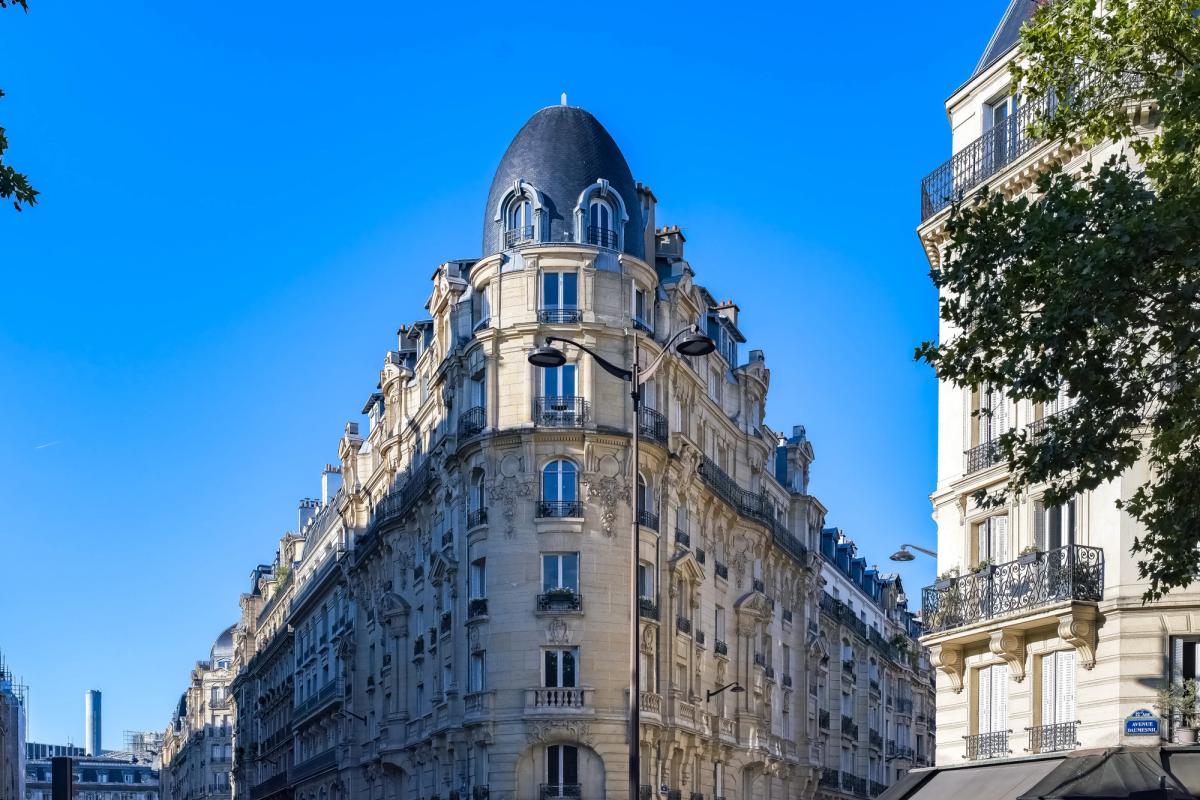
The framework is the same for everyone. What changes is which factor dominates.
Expat family with school-age children
The variables that matter are school continuity, bedroom count, neighbourhood and how much appetite you have for another move.
If the school and the location are still unsettled, rent. You are not ready to fix your geography, and a purchase fixes it expensively. Once children are established and the family expects to stay through a school cycle, buying becomes considerably stronger, and the extra bedroom that felt unaffordable in a rental often looks different when it is being bought rather than leased.
Diplomat or embassy staff
One variable dominates: the posting horizon.
A defined three-year posting almost always favours renting, simply because the acquisition costs have too few years to sit across. Buying becomes worth examining only if there is a deliberate reason to own the property beyond the assignment, such as an intention to return to Paris later or to hold it as a long-term asset. In that case, check the energy label and the second-home tax position before you commit, because both affect what you can do with the property once you leave.
C-suite executive
Career mobility, available capital, opportunity cost and the strength of your long-term connection to Paris.
The question here is rarely affordability. It is allocation. Committing a substantial deposit plus acquisition costs to an illiquid Paris asset is a portfolio decision, and it should be assessed as one. If your life is highly mobile, that capital may be doing better work elsewhere. If Paris is becoming a permanent base, property exposure in a market with genuine scarcity looks different.
Entrepreneur or business owner
Income structure, financing eligibility, liquidity and business capital requirements.
The recurring frustration for this profile is worth naming: financial capacity and French mortgage eligibility are not the same thing. A strong balance sheet, recent self-employment and no French financial history can still produce a difficult file. Two workable responses exist. Extend the rental period and build the history. Or buy without borrowing, if the liquidity position genuinely allows it, and treat refinancing later as an option to explore rather than a plan to rely on.
American or British buyer
This group arrives with the most inherited assumptions, and each one needs adjusting for Paris:
- "Rent is wasted money." Some of a mortgage payment is wasted too. In the early years of a French loan, interest can be more than half of it, and acquisition costs are gone the moment you sign.
- "Buying always builds wealth." Paris apartment prices fell between 2022 and 2024 before stabilising. Long-run appreciation is not a guarantee over a five-year window.
- "Mortgage approval works roughly like at home." French lenders assess income, assets, age and insurability rather than a credit score, cap total debt service at 35 percent of net income, and typically limit non-residents to twenty-year terms.
- "Closing costs are relatively small." They are not. Budget 7 to 8 percent on an existing property.
- "Selling in a few years should be straightforward." Selling is straightforward. Selling profitably after a short hold, net of acquisition costs, agency fees and French capital gains tax, is not.
British buyers should note one further point. Since 2021 the UK sits outside the EU for these purposes, which affects both the deposit lenders expect and the social levy rate applied to a future capital gain.
How Estate in Paris Helps You Decide Before You Buy
Our role at this stage is not to move you toward a purchase. It is to test whether a purchase makes sense at all, and to say so plainly when it does not.
Clarify the decision before searching
Before anyone looks at a single apartment, there is a conversation worth having about the things that actually determine the outcome: how long you realistically expect to be in Paris, what your family plans look like, whether the property is a home or a held asset, where your financing stands, which areas fit your life rather than your image of the city, and what budget survives contact with acquisition costs.
Sometimes the honest conclusion is that buying is not the right step yet. That is a legitimate outcome of the process, not a failure of it.
Evaluate the property before making an offer
France has no MLS. There is no shared listings database you can interrogate from another country, which means the price a portal shows you cannot be checked against anything comparable without work. Public transaction data exists and is genuinely useful, and you can consult it yourself through the government's open database of recorded property sales (opens in a new window), but reading it well at micro-quartier level takes local knowledge.
This is the practical part of what we do. Before an offer goes in, we look at recorded transaction evidence for comparable properties, read the micro-neighbourhood rather than the arrondissement average, and prepare an independent valuation of the apartment you are considering (opens in a new window) so the offer is anchored to evidence. We review the energy performance certificate and what it implies for both value and future lettability, read the copropriété documents and general meeting minutes for works already voted, and flag property-specific risks that a listing will not mention.
For buyers running the process from another time zone, our buying service (opens in a new window) also covers the mechanics that are hard to manage remotely: access to properties that never reach the portals, viewings conducted on your behalf, French-language documentation explained before you sign, and completion by notarised power of attorney if you cannot be in Paris on the day.
Families arriving in Paris can also use our settling-in support for households relocating to the city (opens in a new window), which covers the practical side of the move around the housing decision itself.
FAQ
Month to month, renting is usually cheaper in Paris. Over a long enough holding period, buying tends to win, because acquisition costs get spread thinner each year while rent keeps rising. The crossover depends on your deposit, your rate, your holding period and your ownership costs, not on the city alone.
Conclusion
Renting tends to work better while your time in Paris, your neighbourhood or your career plans remain unsettled. Buying becomes the stronger option once Paris is clearly a long-term base, your finances can absorb the full cost of ownership rather than just the mortgage, and you know where you want to be.
For a large number of international households, the answer is neither of those on its own. Renting first and buying later is not indecision. It is how you turn a location guess into a location decision, and how you arrive at a purchase with a French financial record, a shortlist of micro-quartiers and a realistic budget already in place.
Once buying does start to fit your timeline and your finances, the next step is not to start viewing. It is to test the property and the price against evidence before an offer goes anywhere.