


Selling Property in France: Steps, Costs and Taxes in 2026
The 2026 guide to selling property in France: legal steps, seller costs, non-resident tax rules, and what a Paris sale actually nets you.


- Published on
- Reading time
- 16 min read
Introduction
Selling a French property while you live in New York, London, or Singapore is a particular kind of stress. The notaire writes to you in French. The co-ownership file arrives as a 200-page PDF of assembly minutes. There is no central MLS to check whether your asking price is realistic, and every signature seems to require your physical presence six time zones away.
The good news is that the French system, for all its formality, is predictable. Every sale moves through the same legal stages, the taxes are calculated by fixed rules rather than negotiation, and the law explicitly allows you to complete the entire transaction without setting foot in France. What punishes foreign sellers is not the law itself but missing information: pricing from listing sites instead of actual transaction data, discovering the fiscal representative requirement three weeks before completion, or accepting the wrong social charge rate because nobody checked your residency status.
This guide walks through the full process for 2026: the five legal steps, the documents and diagnostics, what the sale really costs, capital gains tax for residents and non-residents, how to sell entirely from abroad, and where the Paris market specifically stands right now. Answers first, detail after.
The Five Legal Steps of Selling Property in France
Every French sale, whether a studio in the Marais or a house in Provence, passes through the same five stages: valuation, mandate, diagnostics, preliminary contract, and final deed, with a notaire supervising the transfer.
Step 1: Set the price from transaction data
The process starts with a price, and in France that price carries legal weight. Once your property is listed with an agency at a stated figure, an offer at the full asking price is very difficult to refuse. Overpricing does not just slow the sale; it anchors negotiations against you when the market corrects your expectations. Price from completed sales, not from what neighbours are asking.
Step 2: Sign the mandat de vente
With the price set, you sign a mandat de vente, the sales mandate that authorises an agent to market the property.
It comes in two main forms. An exclusive mandate gives one agency sole responsibility, usually with stronger marketing commitments in return. A simple mandate lets several agencies compete, and lets you sell privately to a buyer you find yourself. Read it carefully before signing: it fixes the fee, the duration, and the termination conditions.
Step 3: Complete the diagnostic file
Before the property can be marketed, French law requires the technical diagnostic file, the DDT, along with the Carrez measurement and the co-ownership documents for an apartment. This is the slowest step for owners abroad, so start it the day you decide to sell. The full document list, and one energy audit rule most guides get wrong, is covered in the next section.
Step 4: Sign the compromis de vente
Once a buyer's offer is accepted, the notaire or agent draws up the compromis de vente (or a promesse de vente, its close cousin). This preliminary contract binds both parties, fixes the price, and lists the clauses suspensives, the conditions that can dissolve the sale, most commonly the buyer securing their mortgage.
The buyer pays a deposit of 5 to 10 percent, held by the notaire, and then benefits from a ten day cooling-off period during which they can withdraw without losing it. You will sometimes see fourteen days quoted online, including in AI-generated summaries; the statutory period for property purchases has been ten days since 2015. Sellers, importantly, have no equivalent withdrawal right. Once you sign the compromis, you are committed.
Step 5: Sign the acte authentique and receive your funds
Two to three months after the compromis, once the notaire has completed title checks, land registry searches, and mortgage formalities, both parties sign the acte authentique (also called the acte de vente). Ownership transfers, keys change hands, and the notaire settles the money: repaying any outstanding mortgage on your side, deducting the taxes due, then releasing the balance to you. You receive a completion statement, and later a certified copy of the registered deed.
Diagnostics and Documents You Need Before Listing

French law requires a technical survey file and a set of ownership documents before your property can legally be marketed, so assembling them is a week-one task, not a completion-day one.
1. The technical diagnostic file (DDT)
The Dossier de Diagnostic Technique is a bundle of surveys paid for by the seller and shown to buyers from the first visit. Which reports apply depends on the age and location of the building, but for a typical Paris apartment expect:
- DPE (energy performance certificate): mandatory for every sale, and it must exist before the property is listed, since the energy class now appears in every advertisement.
- Asbestos: for buildings with a permit issued before July 1997.
- Lead: for buildings constructed before 1949, which covers most Haussmann stock.
- Electricity and gas: where the installations are more than 15 years old.
- ERP (risks and pollution): a standard state-of-risks form based on location.
Budget a few hundred euros for the full package and check validity periods; some reports last years, others months.
2. Loi Carrez and your co-ownership file
For any lot in a copropriété, the private floor area must be measured under the loi Carrez and stated in the deed. This is not a formality to estimate yourself: if the real surface turns out more than 5 percent smaller than stated, the buyer can claim a proportional price reduction for up to a year after the sale.
Alongside the measurements, buyers of a co-owned apartment receive the co-ownership file: the règlement de copropriété, the minutes of the last three general assemblies, the amount of service charges, and any planned works. For an owner abroad this is usually the slowest document to assemble, because it depends on the syndic's responsiveness. Request it the day you decide to sell.
3. The energy audit rule most guides get wrong
You will read in many places that any property rated F or G must come with a full energy audit at sale. That is only half true, and the half matters enormously in Paris. The statutory audit applies to individual houses and single-owner buildings rated E, F, or G. An apartment in a copropriété is exempt, whatever its rating, because the renovation scenarios an audit must model concern the building envelope, which no single co-owner controls. If you are selling a Paris apartment, only the DPE itself is required. Knowing this saves you a pointless expense and a scheduling delay.
What Selling Really Costs in 2026
Between agency fees, the diagnostic file, and capital gains tax, the seller's side of a French sale typically absorbs anywhere from 5 to 12 percent of the price, so the number that matters is not what you sell for but what you keep.
Seller Costs vs Buyer Costs in a French Sale
Buyer-side and seller-side costs are often confused, partly because French listings mix them together. The frais de notaire, roughly 7 to 8 percent on an older property, are paid by the buyer. They still concern you, because they shape what buyers can afford to offer. Within them sit the droits de mutation, the transfer duties, and here 2025 brought real news: Paris and the surrounding Grand Paris departments raised their share from 4.5 to 5 percent for sales completed between 1 April 2025 and 31 March 2028, as permitted by the 2025 Finance Act. Details are on the Paris chamber of notaires' note on the increase (opens in a new window).
Your own side of the ledger looks like this:
- Agency fees: anywhere from 3 to 8 percent in Paris depending on the agency and service level, and they are negotiable. Whether they appear as seller-paid or buyer-paid is set in the mandate and stated in the listing.
- Diagnostics: the DDT package described above.
- Mortgage release costs: if a loan is still registered against the property, the notaire deducts the repayment and a modest release fee.
- Capital gains tax: covered fully in the next sections; on a second home it is the largest single item.
- Fiscal representative: for many non-EU sellers, typically 0.5 to 1 percent of the price.
A worked example on an 800,000 euro Paris sale
Numbers make this concrete. Take an American owner selling a Paris apartment for 800,000 euros, bought twelve years ago for 600,000 euros, used as a second home, with no outstanding mortgage:
- Agency fee at 5 percent: 40,000 euros.
- Diagnostics package: roughly 500 euros.
- Purchase price recalculated for tax: 600,000 plus the 7.5 percent purchase-cost allowance and the 15 percent works allowance available after five years of ownership, bringing the tax-relevant cost to 735,000 euros.
- Taxable gain before taper: 65,000 euros, reduced further by twelve years of ownership allowances.
- Resulting capital gains tax and social charges: in the region of 15,000 to 18,000 euros depending on the exact charge rate that applies to their situation.
- Fiscal representative at around 0.75 percent: roughly 6,000 euros.
Net proceeds land near 736,000 euros. The same sale after 22 years of ownership would owe no income tax portion at all, which is why timing questions deserve a professional look before you list, not after.
| Cost item | Who pays | Typical 2026 range | Notes |
|---|---|---|---|
| Frais de notaire (older property) | Buyer | 7 to 8% of price | Includes transfer duties raised to 5% departmental share in Paris until March 2028 |
| Frais de notaire (new build) | Buyer | 2 to 3% | Rare in central Paris |
| Agency fees | Seller or buyer per mandate | 3 to 8% | Negotiable; stated in every listing |
| Diagnostics (DDT) | Seller | A few hundred euros | Required before marketing |
| Capital gains tax and social charges | Seller | 0 to 36.2% of the gain | Zero on a primary residence; taper relief with years owned |
| Surcharge on large gains | Seller | 2 to 6% | On net taxable gains above 50,000 euros |
| Fiscal representative | Seller | 0.5 to 1% of price | Mainly non-EU residents above 150,000 euros |
Capital Gains Tax for Residents and Non-Residents

A primary residence is fully exempt from French capital gains tax; a second home or investment property is taxed at 19 percent plus social charges, with relief that grows every year you own it.
The 19 percent framework and taper relief
The base structure is the same for residents and non-residents. The gain, calculated as the sale price minus your adjusted purchase cost, is subject to 19 percent income tax and, in the standard case, 17.2 percent social charges, a combined 36.2 percent. A surcharge of 2 to 6 percent applies to net taxable gains above 50,000 euros.
Time works steadily in your favour. The official schedule on the French tax authority's page for non-resident sellers (opens in a new window) grants an income tax allowance of 6 percent for each year of ownership beyond the fifth, reaching full income tax exemption at 22 years, and full social charge exemption at 30 years. You may have seen references, including in Google's own AI summaries, to a shortened 17 year schedule. As of publication the official schedule remains 22 and 30 years, so confirm the current position with your notaire before building a plan around either figure.
Two practical levers reduce the taxable gain itself. After five years of ownership you may apply a flat 7.5 percent allowance for purchase costs and a flat 15 percent allowance for works, no invoices required, or use actual documented amounts if higher. Keep every renovation invoice from registered contractors; maintenance and DIY materials do not count, but genuine improvement works do.
The fiscal representative rule above 150,000 euros
If you live outside the EU, the EEA, or Switzerland, which includes American, British, and most Asian and Middle Eastern owners, and your sale price exceeds 150,000 euros per seller, French law requires you to appoint an accredited représentant fiscal. This professional certifies the capital gains calculation, signs the 2048-IMM declaration, and is jointly liable for the tax. Fees generally run 0.5 to 1 percent of the price with minimums around 1,500 to 3,000 euros. The notaire cannot complete the sale without one where the rule applies, so identify your representative early rather than in the final week.
One rate detail is worth real money to British sellers. Under the post-Brexit coordination rules reflected on the tax authority's guidance (opens in a new window), UK residents affiliated to the UK social security system are exempt from the CSG and CRDS portions and pay only the 7.5 percent solidarity levy instead of 17.2 percent, a combined 26.5 percent rather than 36.2. The same applies to EEA and Swiss affiliates. Notaires occasionally apply the higher rate by default, so raise your affiliation status before signing anything and provide proof.
Two exemptions expats often miss
The first concerns owners who have recently left France. If the property was your main residence on the day you moved your tax domicile abroad, the gain can be fully exempt, provided you sell by 31 December of the year following your departure and the property has not been occupied or rented in the meantime, per the tax authority's rules on capital gains for non-residents (opens in a new window).
The second is the 150,000 euro exemption for former residents. An EU national who was tax resident in France for at least two years at any point can exempt up to 150,000 euros of gain on one sale, subject to timing conditions tied to the departure date. If you spent a posting in Paris, bought, then moved on, this provision can transform your tax bill and it is claimed far less often than it should be.
What happens on the US or UK side
France taxes the sale first, and the notaire withholds what is due at completion. You then declare the sale where you live. American sellers report the gain to the IRS but the US-France treaty and the foreign tax credit generally offset French tax paid dollar for dollar, so double taxation is the exception rather than the rule. British sellers declare through self assessment and offset similarly under the UK-France treaty. In both cases the practical advice is identical: keep the notaire's completion statement and the 2048-IMM, because they are the documents your home-country accountant will ask for.
Selling Your French Property Without Coming to France
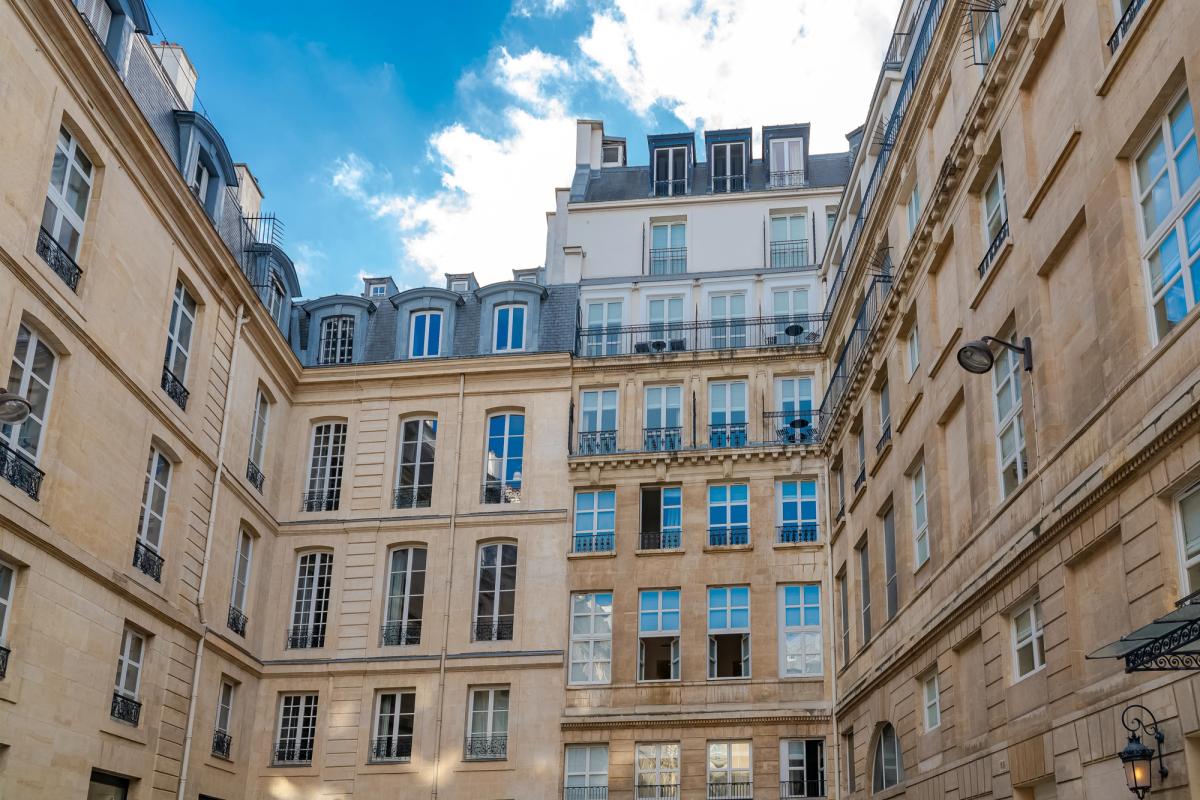
Yes, a French sale can be completed entirely from abroad: the law allows every signature to be given through a notarised power of attorney, and your proceeds can be wired to a foreign account.
Granting power of attorney from abroad
The instrument is the procuration, a power of attorney that authorises someone in France, very often the notaire's own clerk, to sign the compromis and the acte authentique in your name. Prepared abroad, it must be either drawn up before a local notary and then apostilled, or signed at a French consulate in your country of residence. Allow two to four weeks for this paperwork, and check early whether any civil status documents need certified translation.
Precision protects you here. The procuration should state exactly what your representative may accept: the minimum price, the fee structure, and any conditions. A well-drafted mandate plus a well-drafted procuration means the entire sale can run to completion while you follow it by email.
Getting your proceeds home
At completion the notaire repays any mortgage, withholds the French tax, and transfers the balance where you instruct, whether a French account or one abroad. Two things deserve planning. First, exchange rates: on a six-figure euro sum, the difference between a bank's standard rate and a specialist transfer rate is real money, which is exactly why currency firms dominate the search results for this topic. Second, documentation: your receiving bank may ask for proof of source, and the notaire's completion statement answers that question cleanly.
The fiscal representative requirement is the step that most often catches foreign sellers off guard, so it is worth five minutes of video before your first call with a notaire. This walkthrough explains who actually needs one, what they certify, and what they cost.
Pricing and Timing: The Paris Market in 2026

For most international owners reading this, the market in question is Paris, and in 2026 Paris prices very differently street by street: apartments average around 9,600 euros per square metre, up 1.2 percent year on year after two years of decline.
Prices by arrondissement
The averages hide the real story. Notaire transaction data puts the spread from roughly 7,800 to 8,200 euros per square metre in the 19th arrondissement to more than 14,200 in the 6th, close to a factor of two inside one city. The current dynamics matter for timing: the more affordable 18th, 19th, and 20th are posting the strongest annual gains as buyers priced out of the centre migrate east and north, while the 6th, 7th, and 8th are broadly flat, their buyers less sensitive to credit conditions.
Price your property from completed transactions, not listings. The notaires' price map for Greater Paris (opens in a new window) publishes quarterly figures down to quartier level, and the government's DVF database (opens in a new window) records every registered sale, address by address. The gap between asking prices and these recorded figures is precisely the negotiation margin a buyer's agent will use against you. This is also the working method behind a documented valuation of your Paris property from Estate in Paris's evaluation service (opens in a new window): transaction evidence for your building's micro-market rather than a screenshot of comparable listings.
How long a sale takes and when to list
A correctly priced Paris apartment currently finds its buyer in roughly 75 days, and completion adds another two to three months after the compromis. So a realistic end-to-end horizon is five to six months, which is the number to plan around if the sale funds a purchase elsewhere.
Seasonality is modest but real: spring is the most active listing window, with September a strong second. More important than the season is arriving on the market complete: diagnostics done, co-ownership file in hand, price anchored to transaction data. Incomplete files are what stretch 75 days into six months.
Selling a Rented or Low DPE Apartment in Paris
You can sell a tenanted Paris apartment at any time; the real decision is whether to sell it occupied, with the lease transferring to the buyer, or vacant after serving proper notice, and the DPE rating now weighs on that choice.
Occupied or vacant
Selling occupied is simpler and faster: the tenant stays, the lease transfers, and no notice periods apply. The trade-off is price, since the buyer pool narrows to investors and occupied properties customarily sell at a discount. Selling vacant usually nets more, but requires a congé pour vendre, the formal notice to the tenant with strict timing rules tied to the lease anniversary, so it demands planning a year or more ahead in some cases.
There is also a holding-cost angle that pushes many foreign owners toward selling rather than keeping. A Paris apartment that is not your main home carries the taxe foncière, the second-home occupancy tax with Paris applying the maximum 60 percent surcharge permitted under the government's second-home tax rules (opens in a new window), and potentially the IFI wealth tax once net French property assets exceed 1.3 million euros. Owning from abroad is not free, and the arithmetic deserves an honest look.
The DPE calendar and your sale price
The loi Climat et Résilience is repricing energy-hungry apartments in real time. Homes rated G have been banned from new lettings since 1 January 2025, F follows in 2028, and E in 2034. For a seller this cuts two ways. A rented G-rated apartment has a legal problem attached, and buyers discount for it. But the same calendar has created a distinct buyer segment hunting discounted low-DPE stock to renovate, so the right strategy is a conscious choice between renovating before sale, pricing for the renovation buyer, or selling occupied to an investor who has already run the numbers.
If, after weighing all this, you would rather keep the apartment and let it, the letting side is not something Estate in Paris services. Tenant search and rental management in Paris are handled by our sister brand Relocation in Paris (opens in a new window), which works with the same international owner profile on the rental side of the market.
Agent, Private Sale, or Off Market: Choosing Your Route
France fully allows private sales, but with no central MLS and a largely French-speaking buyer pool, most international owners sell faster and cleaner through a mandated agency.
What selling privately really demands
Platforms like PAP and Leboncoin make listing easy, and for a straightforward property with a motivated local seller the savings on fees are genuine. From abroad, the picture changes. You are drafting a French advertisement, fielding calls in French, scheduling visits you cannot attend, and negotiating against buyers who know the DVF data better than you do. An incomplete file or a mispriced listing quietly devalues the property, and there is nobody contractually responsible for fixing it.
What a mandated agency does when you are abroad
The absence of an MLS is the key structural fact of the French market. Listings live inside individual agencies, so an agent's value is partly their network: sharing your listing with other agents to reach every qualified buyer rather than only their own book. Beyond reach, a mandated agent screens buyers' financing before you commit to a compromis, represents you at every visit, and manages the notaire timeline while you sleep in another time zone.
Before signing any mandate, ask five questions: how the fee is calculated and who pays it, whether the mandate is exclusive and how it terminates, which portals and networks will carry the listing, how buyer financing is verified, and who attends visits. The answers separate agencies quickly.
How Estate in Paris Handles a Sale for Owners Abroad

Estate in Paris manages the sale of luxury Paris property from valuation to signing, bringing qualified French and international buyers to owners who are not on the ground themselves.
For a seller abroad, the two things that decide the outcome are the price you list at and the buyers your listing actually reaches. Because French listings are not centralised, selling your Paris property with a bilingual agency (opens in a new window) puts your apartment in front of both pools at once: French buyers active in your arrondissement and international buyers searching in English. The rest, the notaire, the paperwork, the negotiation, reaches you in your own language until the acte authentique is signed. Terms are set out in the sales mandate before anything is signed, and the practical details are covered on the Estate in Paris FAQ page (opens in a new window).
FAQ
Only in defined cases. The requirement applies when the sale price exceeds 150,000 euros per seller, you have owned the property for under 30 years, and you are tax resident outside the EU, EEA, and Switzerland. American and British sellers of Paris apartments very often meet all three conditions. Expect a fee of 0.5 to 1 percent of the price.
Conclusion
Selling property in France from abroad is rarely difficult because of the law. The stages are fixed, the taxes follow published formulas, and remote completion is explicitly provided for. What actually costs foreign sellers money is distance: pricing from listings instead of transactions, discovering the fiscal representative rule late, or accepting a social charge rate that does not match their residency status.
The highest-leverage decision comes first. A valuation grounded in notaire data determines your negotiating position, your timeline, and, through the taper rules, sometimes your tax bill. Get that number right, assemble the file before you list, and the rest of the process is execution.
If a Paris sale is on your horizon for 2026, start with the figures for your own building and arrondissement, then decide with real numbers in hand.